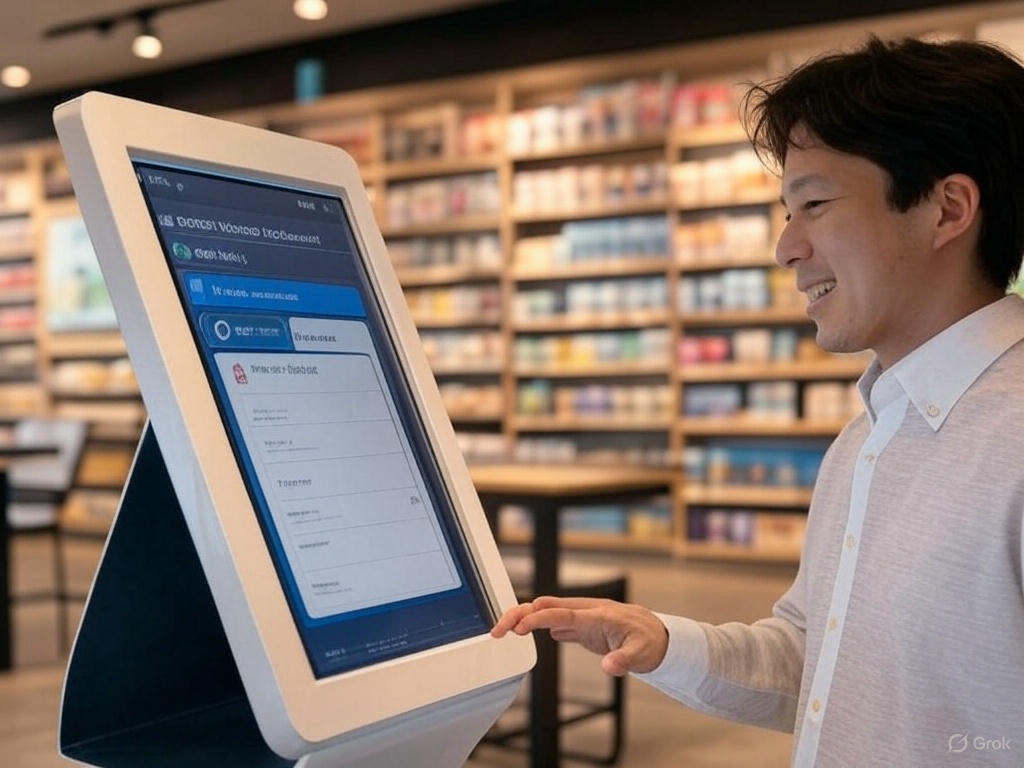
AI chatbots for West Virginia retail stores
62% of calls to small businesses go unanswered. In retail, each one is a lost sale.
That stat from Invoca should sting if you run a shop in West Virginia. Your store hours might be 9 to 6, but your customers search for products at 10 PM, text questions on Sunday morning, and expect an answer before they drive thirty minutes to your location. Every unanswered message is revenue walking to a competitor — or to Amazon.
West Virginia retailers face a double bind. Staffing is thin. The state’s labor force participation rate sits below the national average, and finding reliable part-time help for evenings and weekends has only gotten harder. Meanwhile, customer expectations keep climbing. People want instant answers, and they will not wait until Monday morning to get them.
AI chatbots solve both problems at once. They answer every inquiry around the clock, capture lead information, and cost less per month than a single weekend shift.
What a retail chatbot actually does
Forget the clunky pop-ups from five years ago that looped through the same three scripted responses. Modern AI chatbots hold real conversations. They understand context, remember what a customer asked two messages ago, and provide answers that sound like a knowledgeable employee — not a phone tree.
For a West Virginia retailer, that looks like this:
- A customer asks at 9 PM whether you carry a specific boot brand in size 11. The chatbot checks your FAQ data and responds immediately, or captures the request so you can follow up first thing in the morning.
- Someone finds your shop on Google and wants to know if you offer layaway. The chatbot answers instantly and collects their name and phone number.
- A visitor to your website wants directions from Beckley. The chatbot provides them and asks if they want a text reminder for your weekend sale.
No human had to be on the clock for any of that. Every interaction was captured, every lead was logged, and every customer left feeling heard.
Hollr: the free way to start
If you have never added AI to your business, Hollr is the simplest entry point. It is a free conversational AI widget you drop onto your website. No coding, no IT department, no monthly fee to get started.
Hollr replaces your static contact form with a chat interface that actually talks to visitors. It captures lead details through natural conversation — name, phone number, what they need — and sends you the information so you can follow up. It also includes missed-call text-back, so when you cannot pick up the phone, the customer gets an immediate text response instead of silence.
Why this matters for retail
Static contact forms convert at roughly 2-3%. Conversational AI widgets convert at three to five times that rate. The reason is simple: people are more likely to finish a conversation than fill out a form. They share more detail, too, which means your follow-up call is informed instead of cold.
For a retail shop doing $200,000 a year in revenue, capturing even a handful of additional leads per month can move the needle by thousands of dollars annually. And Hollr is free to start — there is no financial risk in trying it.
Add Hollr to your website and see the difference in the first week.
When you need more than a widget
Hollr handles lead capture and basic inquiries. But retail businesses have deeper operational needs — managing reviews, handling customer service at scale, qualifying leads before they walk in the door. That is where AI Employees come in.
AI Employees are not chatbots. They are autonomous agents that handle specific business functions, learn your operations, and work around the clock without supervision. Here are the ones most relevant to retail.
Five Star — reputation on autopilot
Online reviews make or break a retail store. BrightLocal’s research shows 87% of consumers read reviews before visiting a local business. A store with 200 thoughtful review responses looks dramatically more trustworthy than one with 40 unanswered reviews.
Five Star monitors your reviews across Google, Facebook, and Yelp. It drafts personalized responses you approve with one tap and flags negative reviews for immediate attention. Over time, it learns your brand voice and handles the routine responses entirely on its own.
For a WV retailer competing against big-box stores, a strong review profile is one of your most powerful advantages. Five Star makes it effortless to maintain.
Scout — lead qualification via text
Not every inquiry is worth the same amount of your time. Scout qualifies leads through text-based conversations, asking the right questions to determine intent and urgency before you ever pick up the phone. For retailers that sell high-ticket items — furniture, appliances, outdoor equipment — Scout separates the browsers from the buyers so you spend your energy on the customers most likely to convert.
86’d — restaurant retail and food service
If your retail business includes a food component — a cafe inside a bookstore, a farm-to-table shop with prepared foods, a bakery with a retail counter — 86’d handles customer service for the food side of the house. It manages inquiries about hours, menus, dietary accommodations, and catering orders around the clock.
How AI chatbots solve the staffing problem
West Virginia’s staffing challenges are structural, not temporary. The state has lost population in nine of the last ten census counts. Younger workers migrate toward metro areas. The retailers who remain are stretched thin — often the owner is cashier, buyer, bookkeeper, and customer service rep all in one.
AI does not replace your staff. It handles the work you cannot get to. Consider the math:
- A part-time employee covering evenings and weekends costs $1,500 or more per month after wages, taxes, and management overhead.
- Hollr is free to start. AI Employees run $149 to $499 per month depending on the tier.
- The AI never calls in sick, never needs training on your return policy twice, and never forgets to capture a customer’s phone number.
This is not about eliminating jobs. It is about filling the gaps that no human is available to fill — the 6 PM question, the Saturday morning missed call, the Tuesday review that sits unanswered for three weeks.
Building trust with always-on service
Small-town retail runs on trust. Your customers know you by name. They expect a personal experience. Some retailers worry that AI will feel impersonal, but the reality is the opposite.
An unanswered inquiry is impersonal. A three-day wait for a review response is impersonal. A missed call with no callback is impersonal.
AI fills those gaps with a consistent, responsive presence. When a customer texts at 8 PM and gets an immediate, helpful answer, their trust in your business grows — even if they know it is AI. The key is that someone (or something) cared enough to respond.
The best approach combines AI and human touch. Let the chatbot handle the initial contact, capture the details, and triage the request. Then you follow up personally when it matters most — with full context on what the customer needs.
Getting started: a practical roadmap
You do not need to overhaul your business to benefit from AI. Start small, prove the value, and expand from there.
Week 1: add Hollr to your website
Visit appalach.ai/hollr and install the widget. It takes minutes, not hours. Turn on missed-call text-back so every phone inquiry gets a response even when you are busy.
Week 2: let it run
Resist the urge to tinker. Let Hollr capture real customer interactions for a full week. Watch the leads come in. Note how many arrive outside your normal business hours — that is revenue you were previously leaving on the table.
Week 3: evaluate and level up
Review the data. If Hollr captured even a few leads you would have missed, it has already proved its value. Now consider which AI Employee would solve your next biggest problem. For most retailers, that is Five Star for review management or Scout for lead qualification.
Week 4: measure the impact
Compare your numbers to the month before. Track leads captured, response times, and review engagement. Most businesses see a measurable difference within the first month.
The bottom line for WV retailers
West Virginia retail faces real headwinds — population decline, staffing shortages, competition from e-commerce giants. AI chatbots and AI Employees do not make those challenges disappear, but they give you capabilities that were previously impossible for a small operation.
A single-owner boutique in Charleston can now offer 24/7 customer service. A hardware store in Morgantown can respond to every Google review within minutes. A specialty shop in Lewisburg can qualify leads before they walk through the door.
The tools exist. They are affordable. And the businesses that adopt them now will build advantages — in reputation, in lead capture, in customer loyalty — that compound over time.
Start with Hollr for free, explore AI Employees for deeper automation, or reach out to us directly for a conversation about what makes sense for your store. The best time to start was yesterday. The second-best time is right now.