
Google's New AI Agent Tools: How They Stack Up for SMBs
Five tech giants, one launch day
April 22, 2026 will go down as the day enterprise AI agents stopped being a roadmap slide and became a product category. At Google Cloud Next ‘26 in Las Vegas, Google unveiled the Gemini Enterprise Agent Platform — a unified system for building, managing, and tracking AI agents, complete with a dedicated “Inbox” where virtual workers post progress reports the way teammates would in Slack.
It was not the only announcement that day. OpenAI shipped Workspace Agents. Microsoft expanded Copilot agents inside Windows. Anthropic pushed its private plugin marketplace. AWS rolled out its own agent framework. Five tech giants launched enterprise AI agents within 24 hours of each other, and the small business AI agent tools landscape has not looked the same since.
For Appalachian small business owners watching all this from the sidelines, the question is not which platform wins — that fight is years away. The question is which features actually matter when you are running a six-person HVAC shop, a family restaurant, or a rural medical practice. Let’s get into it.
What Google actually shipped
The Gemini Enterprise Agent Platform is the evolution of Vertex AI, with model selection, model building, and agent building consolidated into one interface. Five pieces of the launch matter for small businesses:
- Agent Designer. A visual builder that lets non-engineers create schedule-based or trigger-based agents. Drag in a trigger (new email, calendar event, form submission), pick a model, define the steps. No code required.
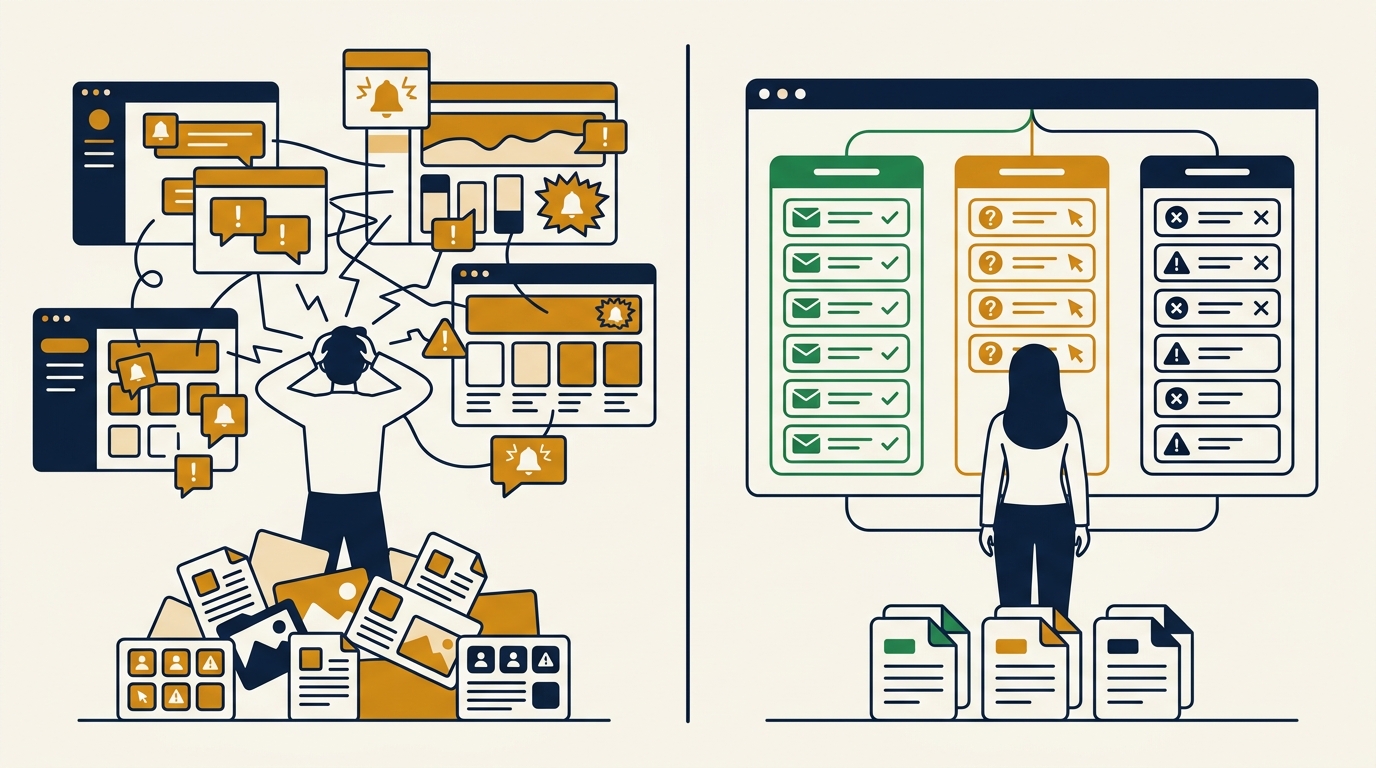
- Inbox for agents. A dedicated view that surfaces every running agent’s status, grouped into “Needs your input,” “Errors,” and “Completed.” Long-running agents — ones that take hours or days — finally have a home where they don’t get lost.
- Long-running agents. Agents that can execute multi-step business processes over extended time windows. Think onboarding a new customer end to end, not just answering one question.
- Skills. Reusable shortcuts for repetitive tasks. Build once, reuse across agents and across teammates.
- 200+ models in Model Garden. Access to Gemini 3.1 Pro, Gemini 3.1 Flash Image, Anthropic’s Claude Opus, Sonnet, Haiku, and roughly 196 other models — all under one billing relationship.
Google framed this as a “full-stack agent platform” and made sure to mention that it works across Workspace, Chrome Enterprise, and Android. As Google’s recap noted, the bet is that agents become as common as documents and emails — something every employee creates and consumes daily.
The agent inbox concept and why it matters
Of all the features Google shipped, the Inbox is the one I’d argue is the most quietly important for small businesses.
Here’s why. AI agents only work in production when humans can supervise them without becoming a full-time supervisor. Until now, every agent platform has had the same operational problem: agents fail silently, run too long, or finish without anyone noticing. Owners end up either ignoring them (defeating the purpose) or babysitting them (defeating the purpose differently).
The Inbox model — borrowed from email and chat — gives owners a single place to glance at every agent’s status. Two agents need approval. Three finished overnight. One errored out and is waiting for a fix. That’s a manageable list. That’s the difference between AI agents that ship value and AI agents that stay in the demo folder.
Gartner’s first agent report this year found that over 40% of AI agent projects are predicted to fail by end of 2027, largely due to costs, security gaps, and operational opacity. Inboxes don’t fix the cost or security parts, but they directly attack the opacity part. The other vendors will copy this pattern within six months — bet on it.
How Google compares to OpenAI and Anthropic
Here’s the honest version of the comparison, stripped of marketing copy.
| Feature | Google Gemini Enterprise | OpenAI Workspace Agents | Anthropic Claude |
|---|---|---|---|
| Agent inbox | Yes (native, central) | Partial (per-app) | No (third-party only) |
| Visual agent builder | Agent Designer (no-code) | GPT Builder | Skills via Agent SDK |
| Long-running agents | Yes (multi-day support) | Yes (with credits) | Yes (with sub-agents) |
| Multi-model access | 200+ models native | OpenAI + partner | Claude + plugins |
| Pricing model | Per-seat + usage | Credit-based (post-May 6) | Per-seat ($20/user) |
| Best at | Workspace integration | Consumer-grade UX | Long documents, reasoning |
A few caveats worth keeping in mind. By March 2026, GPT-5.4 and Claude Opus 4.6 were essentially at parity on flagship benchmarks, and Claude Opus 4.7 (April 16) extended that with a 1M token context window matching what OpenAI shipped in March. Gemini 3.1 Pro performs competitively but doesn’t dominate on raw reasoning. Pick a platform based on where your business already lives, not on benchmark scores that change every six weeks.
The honest summary: if your shop runs on Google Workspace, Gemini Enterprise is the path of least friction. If you live in Microsoft 365, Microsoft’s Copilot agents are the obvious choice. If you need an agent that reasons across long documents — contracts, manuals, case files — Claude is still the strongest at that specific job. OpenAI sits in the middle and wins on consumer-grade polish.
What this means for small businesses
The big-platform agent race is real, but the practical implications for a 10-person business are narrower than the headlines suggest.
The good news
The cost floor for AI agents is collapsing. Google’s launch alone bundles 200+ models, a no-code builder, and an inbox into a single subscription. Two years ago, getting all that would have meant six tools and a developer. Now it’s a settings panel.
The bigger win is integration. Gemini Enterprise plugs directly into Gmail, Docs, Sheets, Drive, Calendar, and Meet. If your business already pays for Workspace, you’ve already paid for the surface area where these agents will run. The marginal cost of trying one is closer to zero than ever before.
Long-running agents also matter more than they sound. A small contractor’s “Tuesday morning” looks like: pull yesterday’s job notes, draft three follow-up estimates, schedule four service calls, send invoices for completed work. That’s not one task — that’s a multi-hour sequence of related tasks that today gets done by the owner. Long-running agents are the first credible version of AI handling that whole sequence instead of just one piece of it.
The harder news
Most small businesses don’t need a full agent platform. They need one or two specific agents that handle one or two specific workflows reliably. Google’s pitch — “every employee builds AI agents” — is aimed squarely at companies with hundreds of employees who can absorb the learning curve. A six-person HVAC shop doesn’t need an agent designer. It needs a dispatch agent that books service calls without losing leads.
The cost picture is also more complex than the launch announcements admit. OpenAI’s credit-based pricing starts after May 6, 2026 — agents that run longer or call more tools cost more. Google hasn’t published the full per-agent pricing for the new platform, but expect a similar structure. Predicting monthly bills for an autonomous system that decides how much work to do is harder than predicting a flat per-seat license.
There’s also a security dimension that doesn’t get enough airtime. The same Gartner study that flagged the 40% failure rate also pointed to agent identity and access management as the top operational risk. Every agent your business runs is a new identity that can read your data, write to your systems, and act on your behalf. Centralized inboxes help with visibility, but they don’t replace policy.
When to wait, when to switch
If you’re running a small business in West Virginia, Eastern Kentucky, or anywhere across the Appalachian region, here’s how I’d think about the next six months.
Wait if:
- You don’t yet have a single AI workflow producing measurable savings or revenue. Adding a platform doesn’t fix the absence of a use case.
- Your IT footprint is scattered across Gmail, QuickBooks, Square, and three different scheduling apps. The integration value of any single agent platform is low until you consolidate.
- Your team hasn’t used AI assistants in their daily work yet. Skip platforms until you’ve burned a few hundred hours of basic Copilot or ChatGPT use.
Switch (or start) if:
- You already pay for Google Workspace and have a clear, repetitive workflow you can map onto an agent — appointment scheduling, invoice follow-up, lead qualification.
- You’ve outgrown a single-purpose AI tool and are spending more time in three separate AI dashboards than you’d spend in a unified one.
- You have a part-time employee whose job is mostly answering the same questions or moving data between systems. Those are the two patterns where an agent earns its keep within 60 days.
Buy purpose-built first. Most Appalachian small businesses I work with get more value from a single AI employee built for their industry than from a general-purpose agent platform. A purpose-built agent for HVAC dispatch, restaurant operations, or property management already knows the workflow. A general platform makes you build the workflow yourself. That’s a real cost in time and judgment, and it’s the cost most launch coverage skips over.
If you’re trying to decide between platforms or trying to figure out whether an agent fits your business at all, we help small businesses sort this out without selling you a stack you don’t need.
What to watch in the next 90 days
A few signals will tell you how this market actually shakes out:
- Pricing transparency. Whichever platform publishes clear per-agent monthly costs first wins SMB share. Credit-based models will lose to predictable per-seat pricing for businesses under 50 employees.
- Failure rates in production. Gartner’s prediction that 40% of agent projects will fail by 2027 is the metric to watch. The first vendor that publishes honest reliability data builds trust.
- Vertical agent marketplaces. The platforms are general-purpose. The customers want vertical. Watch for Google or OpenAI to acquire industry-specific agent companies before year-end.
- Inbox interoperability. Right now your Google agent inbox doesn’t talk to your OpenAI agent inbox. The first standard that fixes that — likely some version of Anthropic’s Model Context Protocol extended for agent state — wins developer mindshare.
The bottom line
Google’s Cloud Next ‘26 launch was the most complete enterprise agent announcement to date — but “most complete” is not the same as “right for your business.” The Inbox concept is the feature small businesses should actually pay attention to, because it’s the one that makes AI agents operationally manageable instead of theoretically useful.
If you already run on Google Workspace, this is worth a serious look. If you don’t, the launch matters less than the pattern: every major AI vendor now thinks agents — not chat — are the future of work. That’s not a forecast anymore. That’s a product category.
Need help deciding whether an agent platform fits your business — or whether a purpose-built AI employee makes more sense? Get in touch. We help Appalachian small businesses navigate this without ending up with a stack of tools that nobody on the team actually uses.