
Microsoft's $10B Japan AI Bet — What It Means for SMB Pricing
A $10 billion build, half a world away
On April 3, 2026, Microsoft committed $10 billion to Japan over four years — Azure data center expansion, GPU compute through Sakura Internet and SoftBank, GitHub data residency, and training a million engineers by 2030. It’s a Japan story on the surface. Underneath, it’s a signal about how AI pricing, latency, and availability are about to fragment by region — and what that means for small businesses buying AI tools from any vendor, anywhere.
If you run a shop in Beckley or Boone, you’re not buying GPU time directly from Microsoft. But the price you pay for an AI tool, the speed at which it responds, and whether it’s even available on your plan, all trace back to where compute capacity lives and what it costs the vendor to rent it. Hyperscalers spending $10 billion to put GPUs in a specific country is the upstream variable that eventually shows up on your invoice.
What Microsoft actually announced
The four-year, $10 billion plan covers three pillars, per Microsoft’s announcement:
- Infrastructure — expanding Azure data center capacity in Japan, GPU-based AI compute with data sovereignty controls, GitHub data residency, and Azure Local sovereign edge capabilities
- Cybersecurity — deeper public-private partnerships with Japanese national institutions
- Workforce — training more than one million engineers, developers, and workers by 2030
The infrastructure piece is the one that moves markets. Microsoft is partnering with Sakura Internet and SoftBank so domestic Japanese providers can offer GPU-based AI compute through Azure while data stays in-country. Sakura Internet’s stock jumped 20% on the announcement, which tells you the market thinks this regional partnership model is real, not symbolic.
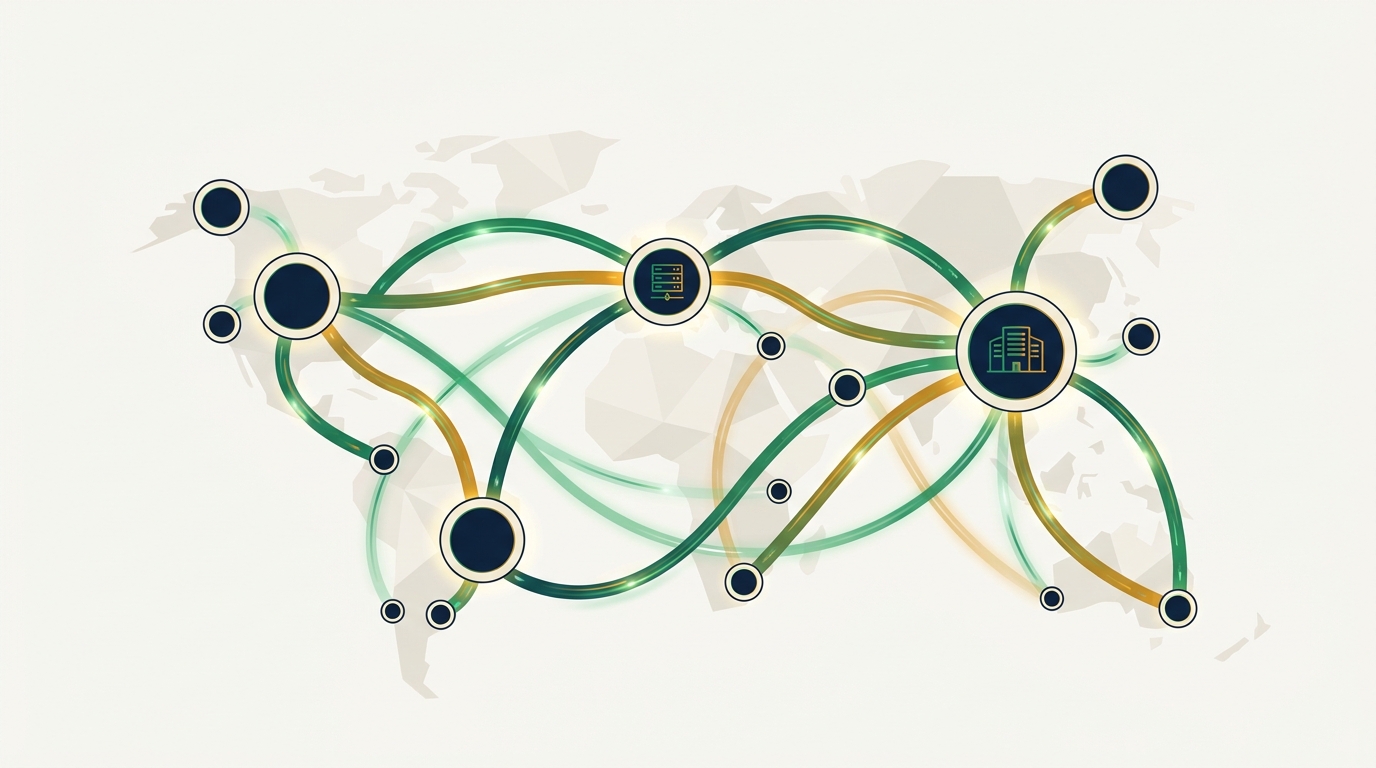
This isn’t the first build of its kind. In the past 18 months, hyperscalers have committed billions to regional capacity in the UK, France, Germany, India, the UAE, and several US states. Japan is one node in a global rebuild that’s running in parallel.
Why the regional capacity race matters for small businesses
There are two ways AI infrastructure costs reach a small business: vendor pricing, and the experience of using the tool.
Vendor pricing follows the cheapest GPU-hour
When Microsoft builds capacity in Japan with local partners, the per-GPU-hour cost in that region drops as supply increases. The same dynamic plays out in every market where a hyperscaler invests. Vendors building on Azure, AWS, or Google Cloud — which is most AI tools you’d consider for a small business — eventually reflect that lower input cost in their pricing. Or, more often, in their margins, then in their feature gating, then eventually in their pricing.
The lag between a hyperscaler announcement and a tool’s pricing change is typically 6 to 18 months. Microsoft’s recent state-of-AI report noted 17.8% of working-age adults globally now use AI — that demand is what makes the math on a $10 billion regional build pencil out. As capacity catches up to demand, marginal cost per inference drops. That’s why Google introduced Gemini 3.1 Flash-Lite at 2.5x faster and lower cost in early May, and why Anthropic doubled Claude Code rate limits the same week. The capacity is starting to land.
Latency depends on where the model runs, not where you sit
A small business in Charleston, West Virginia is closer to Northern Virginia data centers than a business in Tokyo is to anything Microsoft is building. So the Japan build doesn’t directly help an Appalachian SMB. But it changes the global routing math: when Microsoft has surplus Japanese capacity, US-region demand spikes get routed less often, US response times stay tighter, and the AI tool you bought from a Seattle SaaS vendor doesn’t degrade during peak hours.
This is also why edge networks matter as much as hyperscaler regions. Cloudflare’s network reaches 95% of internet users within 50 milliseconds from 330+ cities — including, increasingly, AI inference at the edge through Workers AI. For an SMB, the practical difference is: a tool that runs inference on a Cloudflare or Fastly edge node responds the same in Welch as in Manhattan. A tool that runs inference only in us-east-1 doesn’t.
What’s underreported about regional AI builds
Most coverage frames these announcements as geopolitical chest-thumping or sovereignty plays. Both are real. The underreported angle is the vendor lock-in pattern these regional builds create.
When Microsoft builds GPU capacity with Sakura and SoftBank in Japan, every Japanese AI startup that wants in-country data residency now has a strong reason to build on Azure specifically. Same dynamic plays out for AWS in Europe, Google in India, and Oracle in the Middle East. Regional builds aren’t neutral infrastructure — they’re sales funnels that lock vendor ecosystems into a single hyperscaler per region.
For a small business, the second-order effect is that the AI tool you choose today is probably more locked into its underlying cloud than your previous SaaS purchases were. Switching from a Microsoft-stack AI vendor to a Google-stack one in 2027 will be harder than switching CRMs was in 2018, because the data residency, latency, and feature roadmap will all be hyperscaler-shaped.
The other thing missing from most coverage: these builds presuppose reliable power and water, which is increasingly a regional bottleneck. Microsoft can spend $10 billion in Japan because Japan can deliver the grid capacity. The same dollars in some US regions are running into PJM emergency auctions and stalled interconnection queues. The regional race is increasingly an electricity race, and that’s a story Appalachia is in the middle of — see the Penzance $4B West Virginia project and the coal-country data center rush for what that looks like locally.
What to actually do this month
You don’t need to react to every hyperscaler press release. You do need a working theory of where your AI tools live and what that means for your bill and your reliability. Three concrete moves:
- Find out where your AI tool runs. Ask your vendor — or check their docs page — which cloud and which region(s) host inference. If they can’t answer, that’s a signal. If the answer is “one US region only,” your latency and uptime are tied to that single region.
- Ask about data residency before you sign a renewal. If you’re a healthcare, legal, or financial small business, this is no longer optional. The vendors who handle this well will say “we can run your workload in your region with proof”; the ones who handle it badly will say “all our data is in the US.”
- Watch for pricing changes through Q3. As regional capacity comes online, expect AI tool vendors to roll out tiered regional pricing or new lower-cost SKUs. The first vendors to do this often grab share; if your current tool is silent on this through summer, it’s likely losing on cost basis.
The bottom line: Microsoft’s $10 billion in Japan isn’t about Japan. It’s a public marker on the global AI capacity buildout that quietly determines what your AI tools cost, how fast they respond, and how locked-in you become.
What to watch in your own region
For Appalachian businesses specifically, the signals to track aren’t in Tokyo. They’re in Charleston, Columbus, Knoxville, and the federal data center incentives that determine whether AI compute lands within reasonable network distance of you. Cloudflare and other edge providers continue to do more for rural latency than any hyperscaler regional build will, because edge nodes scale into smaller markets.
The big picture is straightforward: AI tools are getting cheaper and faster on a global average, but the variance is widening. Businesses on the right networks, with vendors built on the right clouds, are getting most of that improvement. Businesses on legacy stacks are getting a sliver of it. The choice isn’t whether to use AI — it’s whether the AI you use is on the gaining end of the infrastructure race.
If you want help mapping your stack to where AI capacity actually is — and isn’t — that’s the kind of practical, region-aware work we do at Appalach.AI. Get in touch or explore our consulting services to talk through what an AI infrastructure strategy looks like when you’re not a hyperscaler customer directly.